
When you lose the person you’ve shared your life with—the one who sat beside you at the kitchen table every morning, held your hand through every joy and hardship, laughed at your bad jokes, and knew your every habit — life as you know it changes forever.
There’s an empty chair now. A quiet house. A silence that feels deafening.
For many widows and widowers, losing a spouse isn’t just about missing someone you loved. It’s about losing a part of yourself—your daily rhythm, your sense of security, even your identity. After years or even decades of being part of an “us,” suddenly you’re left with “me.” And that’s not just painful. It’s disorienting. It’s lonely. And it can be deeply frightening.
The Earthquake of Loss
Grief after losing a lifelong partner is unlike any other kind of pain. It can shake the foundation of who you are.
Simple moments—pouring coffee, watching a favorite show, going to bed—become reminders of the person who’s no longer there. For seniors especially, the loss can feel like the end of the story. After all, when you’ve built your whole world around someone, it’s hard to imagine what comes next.
And for many, that feeling of “What’s left for me now?” can slip into despair. Studies show that older adults who lose a spouse have some of the highest rates of depression, loneliness, and even suicidality of any age group. In fact, research has found that widowers, particularly men, face a 15-fold increase in suicide risk within the months following their partner’s death.
Those numbers aren’t just statistics—they represent people whose grief was too heavy to carry alone.
When the World Becomes Too Quiet
If your life revolved around your spouse—and for many seniors, it does—their loss can feel like being cut adrift. Friends you shared as a couple may fade away. Family might mean well but not understand. And after years of companionship, the thought of building new friendships or finding a new community can feel overwhelming.
Many seniors simply haven’t had to make new friends in decades. So when the partner who was your constant source of connection is gone, it’s easy to retreat into isolation.
You might find yourself thinking:
- “Everyone I loved is gone.”
- “No one wants to hear about my grief.”
- “It’s too late for me to start over.”
But none of that is true. There is still possibility—still meaning, still love, still light.
You Still Matter. You Still Belong.
It might not feel like it right now, but your story isn’t over. The love you shared didn’t end when your spouse passed—it lives in you. It lives in your memories, in your laughter, in the way you love others.
And as much as your heart aches, it’s also proof that you can love deeply again—not necessarily romantically, but in the friendships you make, the people you help, the moments of connection that remind you you’re still part of the world.
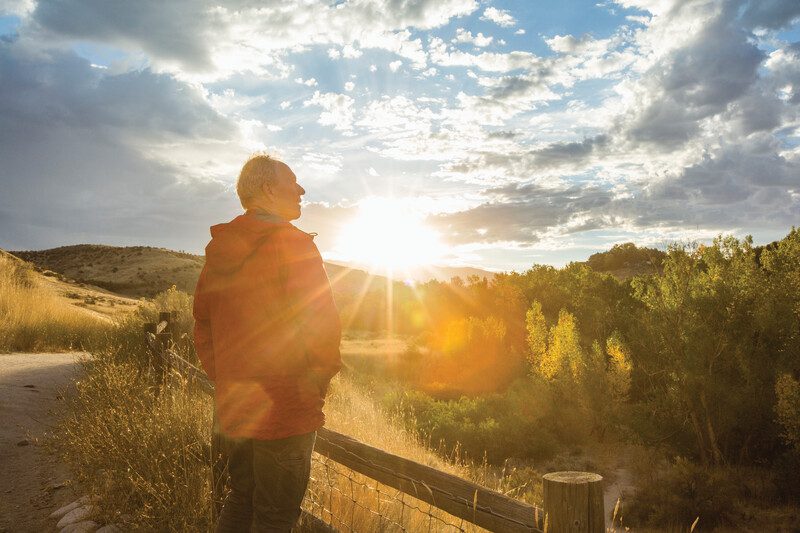
There are still sunrises to see. Still songs that will stir your soul. Still people who need your wisdom and your presence. Still hands to hold.
You are not too old.
You are not too late.
And you are not alone.
How to Begin Finding Your Way Back
Healing doesn’t mean “moving on.” It means finding a way to carry your love forward while allowing life to meet you again.
Here are a few small but meaningful steps:
- Let yourself feel. Cry. Yell. Sit in silence. Your emotions are not weakness—they’re love, still living inside you.
- Reach out, even when it feels hard. Join a grief group, call an old friend, attend a senior center, or talk to a counselor. You don’t have to know what to say—you just have to show up.
- Let people in. You may feel like no one can understand, but there are others walking this same road. Sometimes the greatest comfort comes from realizing you’re not alone in your grief.
- Ask for help. Depression and hopelessness after loss are not things you have to face alone. Therapists and support groups exist for seniors who are grieving—and reaching out is a sign of strength, not surrender.
There Is Still Life Left to Live
Losing your spouse will always be part of your story. But it doesn’t have to be the end of it. The love you shared deserves to be honored by your continued living—by finding small moments of peace, laughter, and connection again.
There is still purpose for you here.
There are still people who need your presence.
And there is still joy to be found—quiet, gentle joy that grows slowly, one heartbeat at a time.
You’ve already survived the unthinkable. And that means you still have the courage it takes to keep going.
If you or your loved one is experiencing a mental health crisis, CALL 988 or seek the nearest emergency room.
For physical health emergencies, CALL 911 or get to the nearest emergency room.